




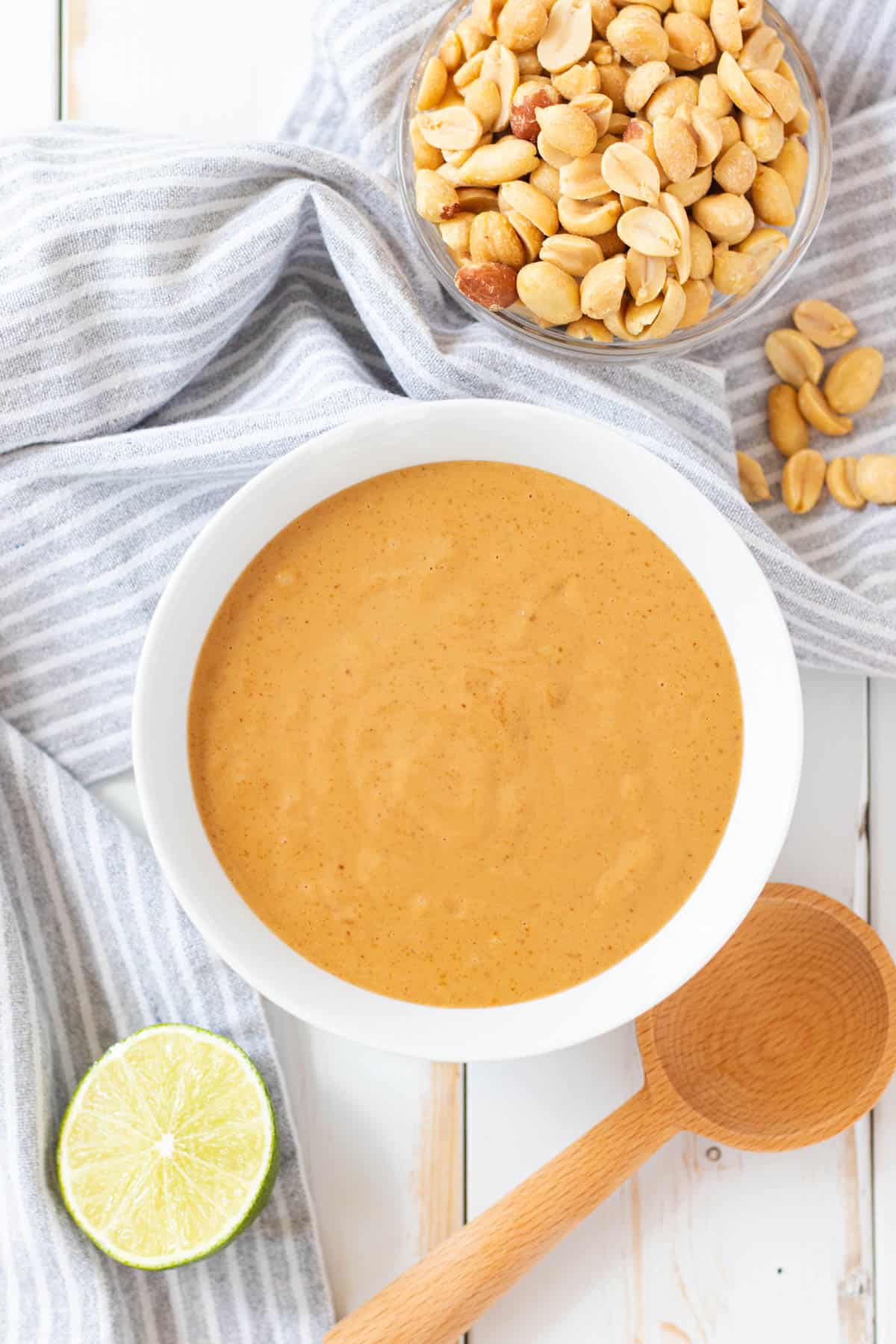
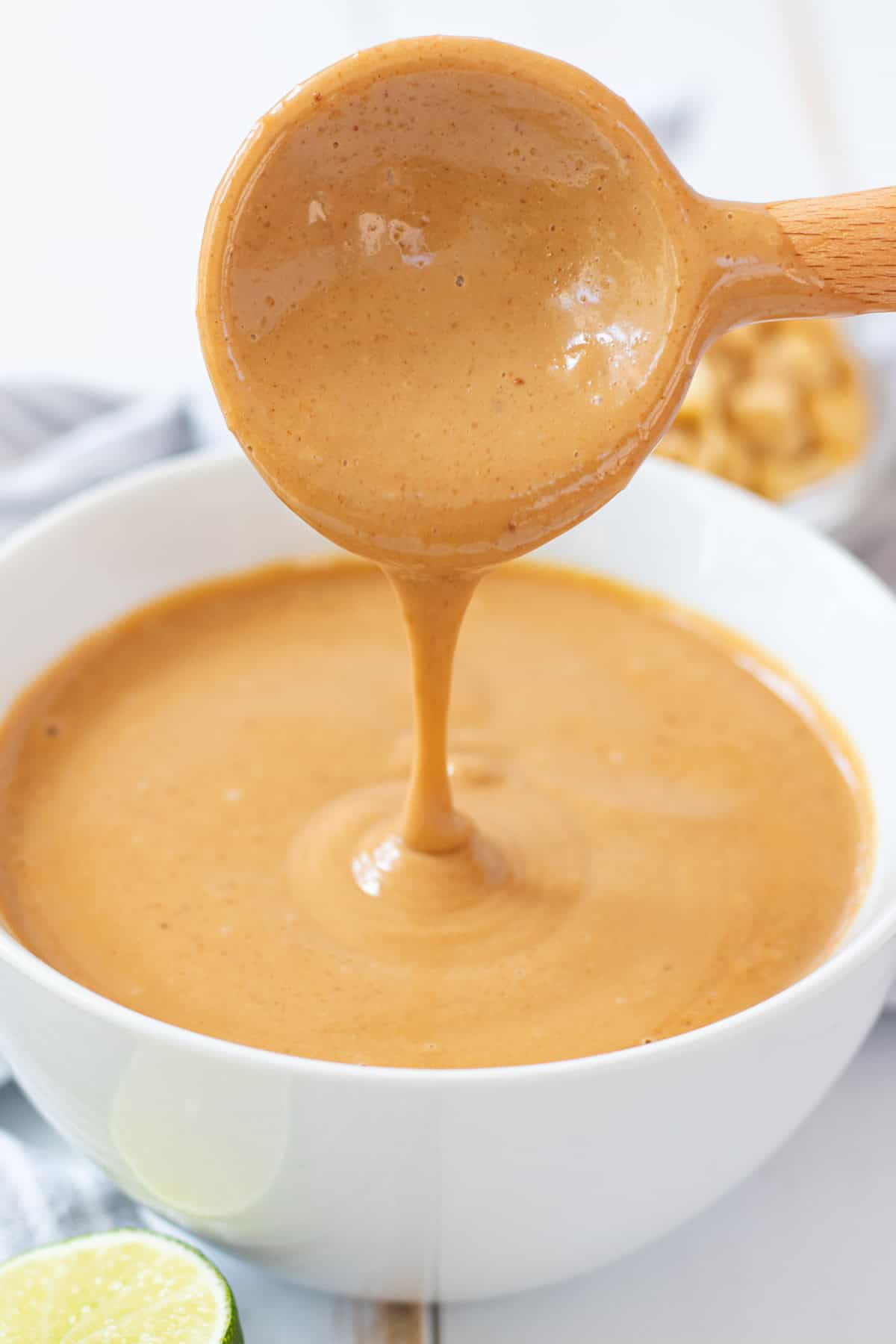
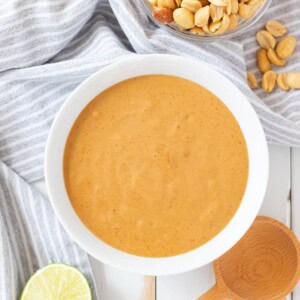
I've made a lot of sauce recipes in my life, but this Vietnamese Peanut Sauce Recipe is one that even people who don't like peanut butter will love. It's creamy, super smooth, and a little fiery. No cooking, no long list of ingredients, just a jar and an immersion blender are all you need. I blend instead of whisk, because peanut sauce should be smooth enough to make a spring roll feel like it's wearing a silk robe. If you've been burned by gritty, separated peanut sauce before, consider this your redemption round.
Jump to:
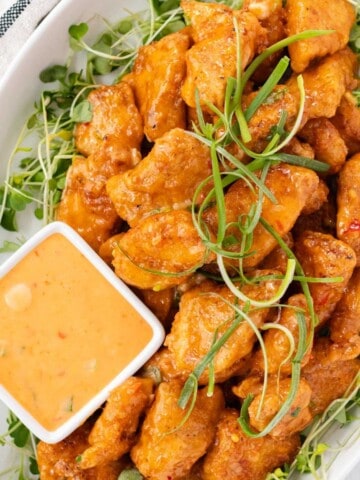
If you love bold and delicious sauce recipes, you'll want to check out my honey garlic sauce for a sticky-sweet option, my teriyaki sauce for a more classic glaze, my bang bang sauce for something with a little more kick, or my homemade eel sauce for drizzling on literally everything. For more dipping sauce inspiration, my sriracha aioli and roasted sesame dressing are also reader favorites.
Why You'll Love This Homemade Peanut Sauce Recipe 🥜
- It's ready in under 10 minutes. Everything goes straight into a jar or cup and gets blended, so there's no simmering, babysitting a pot, and no dishes beyond the blender attachment.
- This peanut sauce is genuinely creamy, not gritty. Using an immersion blender instead of a whisk breaks everything down into a silky, restaurant-style texture that clings to noodles and vegetables instead of separating.
- It's endlessly versatile. Use this creamy peanut sauce for spring rolls, a topping for Vietnamese noodle bowls, a dressing for chickpea pasta salad, or drizzle it over roasted broccoli or crispy kalettes.
- You control the heat and sweetness. Add a little more sambal oelek for spice, or a little more hoisin for sweetness.
Summarize and Save This Recipe Using:
Ingredients You'll Need
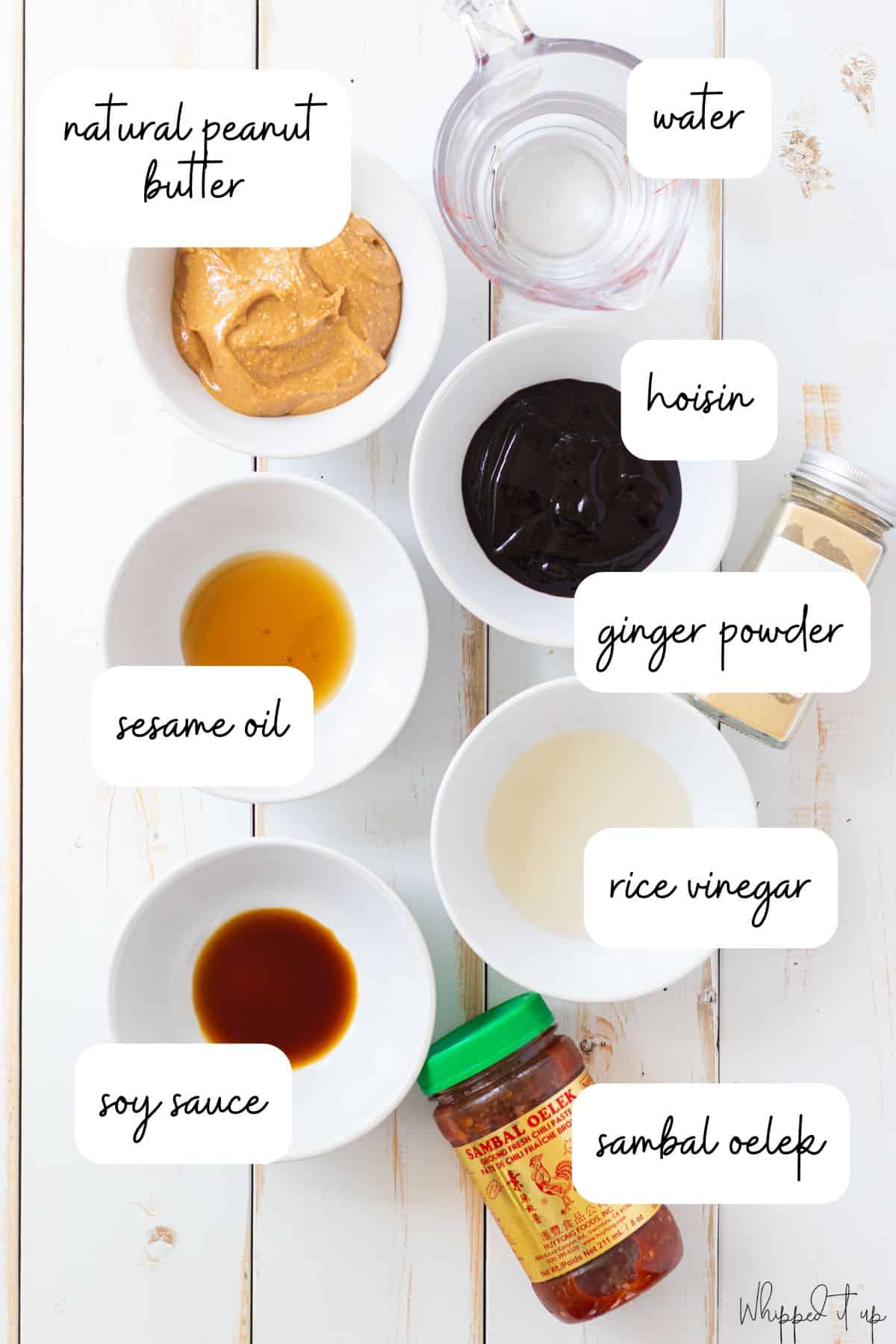
- Natural Peanut Butter: This is the base of the entire sauce. Stick with natural peanut butter for this recipe, sweetened peanut butter will make the sauce overwhelmingly sweet.
- Hoisin Sauce: This is the main ingredient that pulls this sauce towards Vietnamese peanut sauce territory instead of a straight Thai peanut sauce. Sub with a mix of soy sauce and a touch of honey if you're out.
- Sambal Oelek: A raw chili paste that adds heat and a slight vinegary bite. Sriracha or chili garlic sauce both work as substitutes, though the flavor will be slightly sweeter.
- Rice Vinegar: Brightens the whole sauce and keeps it from tasting flat. Sub with fresh lime juice if needed.
- Ginger Powder: Adds warmth without the texture of fresh ginger. If you want to use fresh, use about two to three times the amount and grate it as finely as possible so the sauce stays smooth.
- Sesame Oil: Gives this sauce its signature nutty, slightly smoky depth.
- Soy Sauce: A splash of soy sauce is all this sauce needs. It adds a tiny bit of saltiness and umami flavor. Tamari is a great gluten-free peanut sauce substitute, or use coconut aminos if you're avoiding soy.
- Water: Thins the sauce and balances the flavor profile. I use the full amount of water, but if you like a slightly thicker peanut sauce, use less.
- Lime Juice (optional): Lime juice adds a lovely citrusy taste and brightens the sauce. It can be nice to have, but it is left as an optional ingredient because it is not technically needed if you are using rice vinegar as well.
All ingredients and measurements can be found on the recipe card below.
Easy Recipe Variations
- Spicy Peanut Sauce: Double or triple the sambal oelek, or add a pinch of red pepper flakes.
- Different Nut Butters: The peanut butter can be swapped for other nut butters like almond butter, cashew butter or sunflower seed butter.
- Add Garlic: Blend in a fresh garlic clove or half a teaspoon of garlic powder.
- Coconut Peanut Sauce: Replace half or all of the water with coconut milk for a richer, slightly sweeter, more traditional Thai peanut sauce taste.
How To Make Vietnamese Peanut Sauce
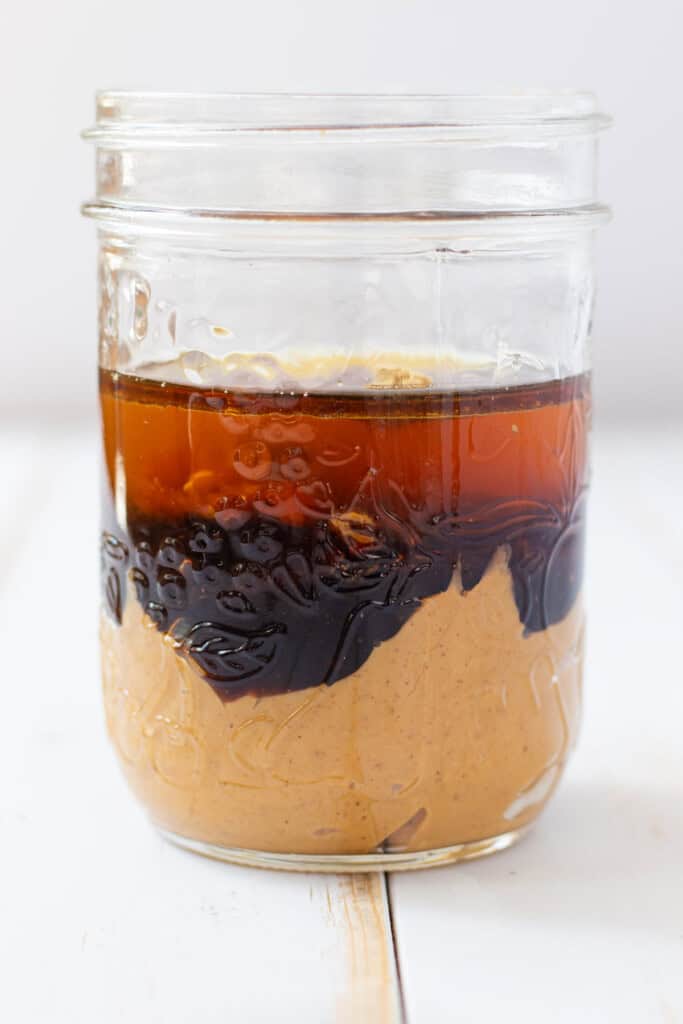
Step 1
Making this Vietnamese peanut sauce couldn't be easier. All you have to do is add the peanut butter, hoisin, rice vinegar, sesame oil, soy sauce, ginger, sambal oelek, and water straight into a tall cup or jar.
Save This Recipe! 💌
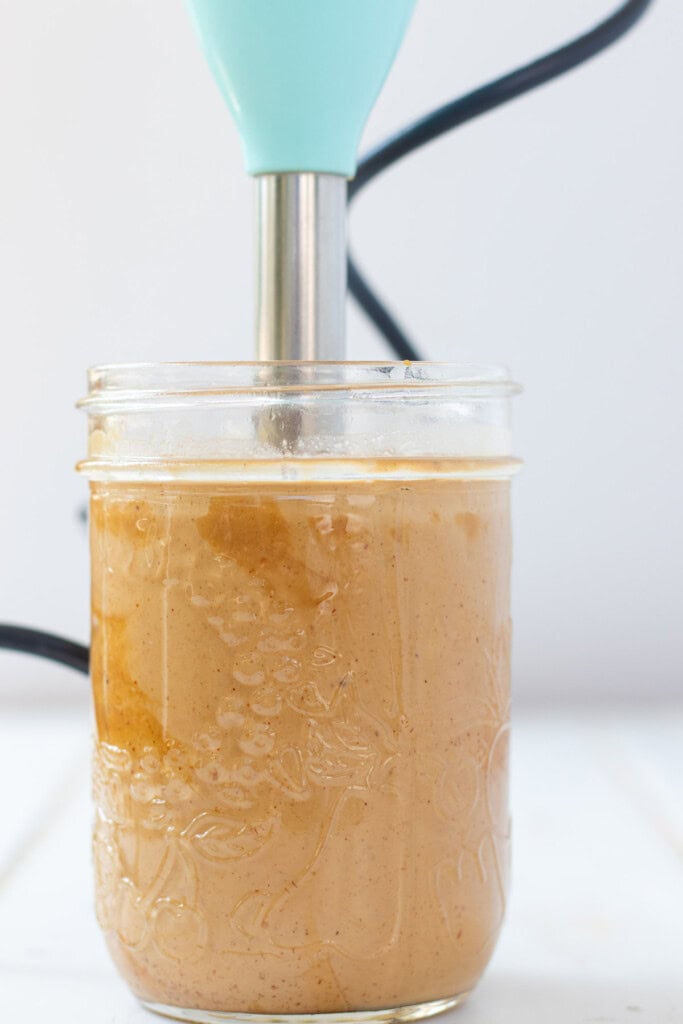
Step 2
Then blend it all together with an immersion blender until it's completely smooth and creamy.
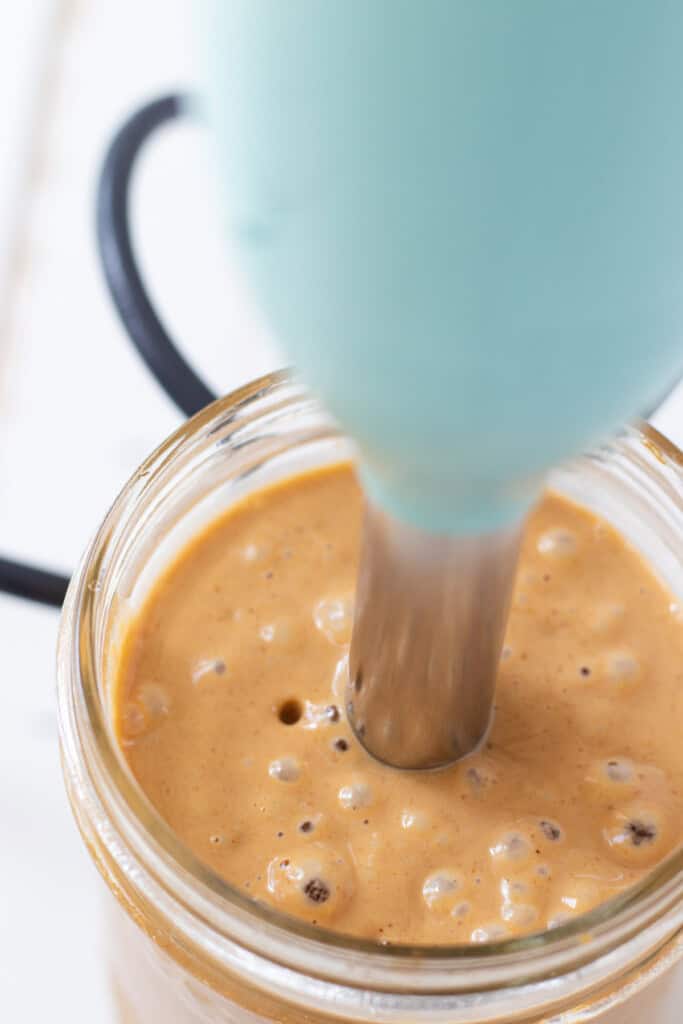
Step 3
If it's thicker than you'd like, just blend in a little bit more water, or you can add a squeeze of fresh lime juice at the end to brighten the sauce before serving, it's optional, though.
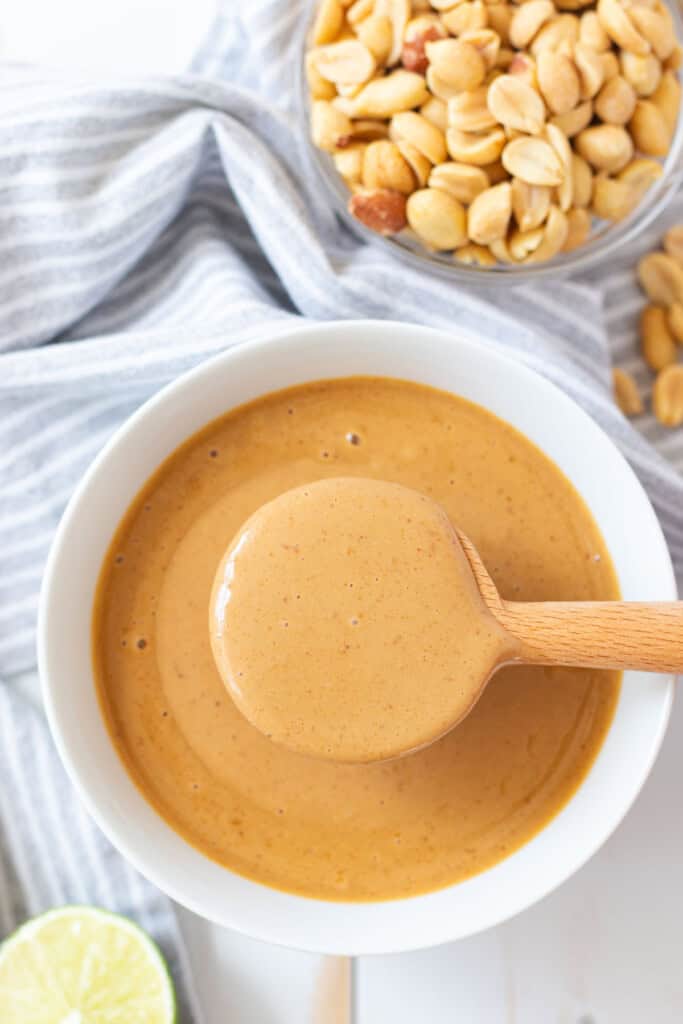
Step 4
Serve this creamy peanut sauce over bowls like these vermicelli chicken bowls, pan-seared salmon bowls, or chicken and rice bowls.
Helpful Peanut Sauce Tips
- Use a tall, narrow container that just fits the head of your immersion blender. Immersion blenders work best when the blades are completely submerged. Mixing it in a bowl can lead to splashing and an uneven blend.
- Use an immersion blender, not a regular blender. An immersion blender emulsifies the sauce better. In my testing, a regular blender struggled to get a smooth consistency. Wide-based blenders also need much more volume to blend properly, so you'd end up tripling the recipe just to get enough coverage.
- Add the water gradually. It's much easier to thin a thick sauce than to fix one that's gone too runny. Start with less water, and add the rest gradually until you reach your desired consistency.
- Let it sit before serving. Letting the sauce rest for even 10 minutes before serving will allow the flavors to meld and the ginger powder and sambal oelek to fully hydrate.
How To Store
Store extra Vietnamese peanut sauce in an airtight container or in a jar with a tight-fitting lid for up to 1 week in the refrigerator. Give it a quick stir or shake before serving.
Frequently Asked Questions
I don't recommend freezing this one, since the sauce can separate once thawed and it won't blend back together smoothly.
Vietnamese peanut sauce is typically built on a base of peanut butter, hoisin sauce, and chili paste, which gives it a sweeter, more savory flavor profile than the coconut-based peanut sauces common in Thai cooking. This version also includes rice vinegar, sesame oil, soy sauce, and ginger for a perfect, creamy peanut sauce recipe!
The Thai version often leans on coconut milk, red curry paste, or fish sauce for it's flavor profile. While the Vietnamese version relies on hoisin sauce and sambal oelek instead.
This usually means it needs more liquid or a better blend. Add water, one tablespoon at a time and blend again with the immersion blender until it is fully smooth. Using cold peanut butter straight from the fridge is another common mistake that can cause a grainy texture.
This creamy peanut sauce is fantastic with fresh spring rolls, vermicelli grilled chicken bowls, cold noodle salads, and vegetables of all kinds.
More Asian-Inspired Recipes To Try
If you made this Vietnamese Peanut Sauce Recipe or any other recipe on my website, please leave a 🌟 star rating, a 💬 comment and share it on Pinterest, Instagram and Facebook!
📖 Recipe
Vietnamese Peanut Sauce Recipe
↑ click the stars to rate this recipe ↑
Print Recipe Pin RecipeEquipment
- Tall Jar or Container
Ingredients
- ½ cup Peanut Butter
- ¼ cup Hoisin Sauce
- 2 Tablespoons Rice Vinegar
- 2 teaspoons Sesame Oil
- 1 teaspoon Soy Sauce
- ½ teaspoon Ginger Powder
- ½ teaspoon Sambal Oelek
- ¼ - ½ cup Water
- 1-2 teaspoons Lime Juice optional
Instructions
- Add the peanut butter, hoisin sauce, rice vinegar, sesame oil, soy sauce, ginger powder, sambal oelek, and water to a tall, narrow cup or jar (the kind that came with your immersion blender works well).
- Insert the immersion blender all the way to the bottom of the cup. Blend on high for 30-60 seconds, moving the blender slightly up and down, until the sauce is completely smooth with no streaks of peanut butter remaining.
- Check the consistency. For a thinner sauce, blend in a little additional water at a time until the desired consistency is reached.
- If using, stir in the fresh lime juice to your taste.
- Taste and adjust, adding more sambal oelek for heat or more hoisin for sweetness, blending briefly to combine after each addition.
- Transfer to a jar or airtight container and use immediately, or store in the refrigerator.
Save This Recipe! 💌
Notes
- Peanut Butter: Use natural, unsweetened peanut butter for this recipe. Sweetened peanut butter will cause the sauce to be overly sweet.
- Hoisin Sauce: Can be subbed for a mixture of soy sauce and honey if you're out.
- Rice Vinegar: Apple cider vinegar or fresh lime juice can be subbed in if needed.
- Ginger Powder: If using fresh ginger, use two to three times the amount and make sure it is finely grated.
- Soy Sauce: Can be swapped for Tamari if you need a gluten-free peanut sauce or coconut aminos if you're avoiding soy products.
- Lime Juice: Is completely optional and not required because of the rice vinegar, but it adds a nice brightness to finish the sauce.
- Different nut butters like almond butter, sunflower seed butter, or cashew butter can be used. Just ensure they are unsweetened.
- I recommend using an immersion blender over a regular blender. During testing, the immersion blender produced a way smoother sauce every time.
- Let it sit for a few minutes before serving to let all the flavors settle and the ingredients fully hydrate.
- Store leftovers in an airtight container in the fridge for up to 1 week. I do not recommend freezing peanut sauce.
Nutrition
The nutritional information provided is an estimate based on an online nutrition calculator and it will vary based on the ingredients that you use.

Jessica says
I developed this peanut sauce to be super smooth, easy to make, and delicious. We hope that you love the recipe and would love to hear if you try it!