






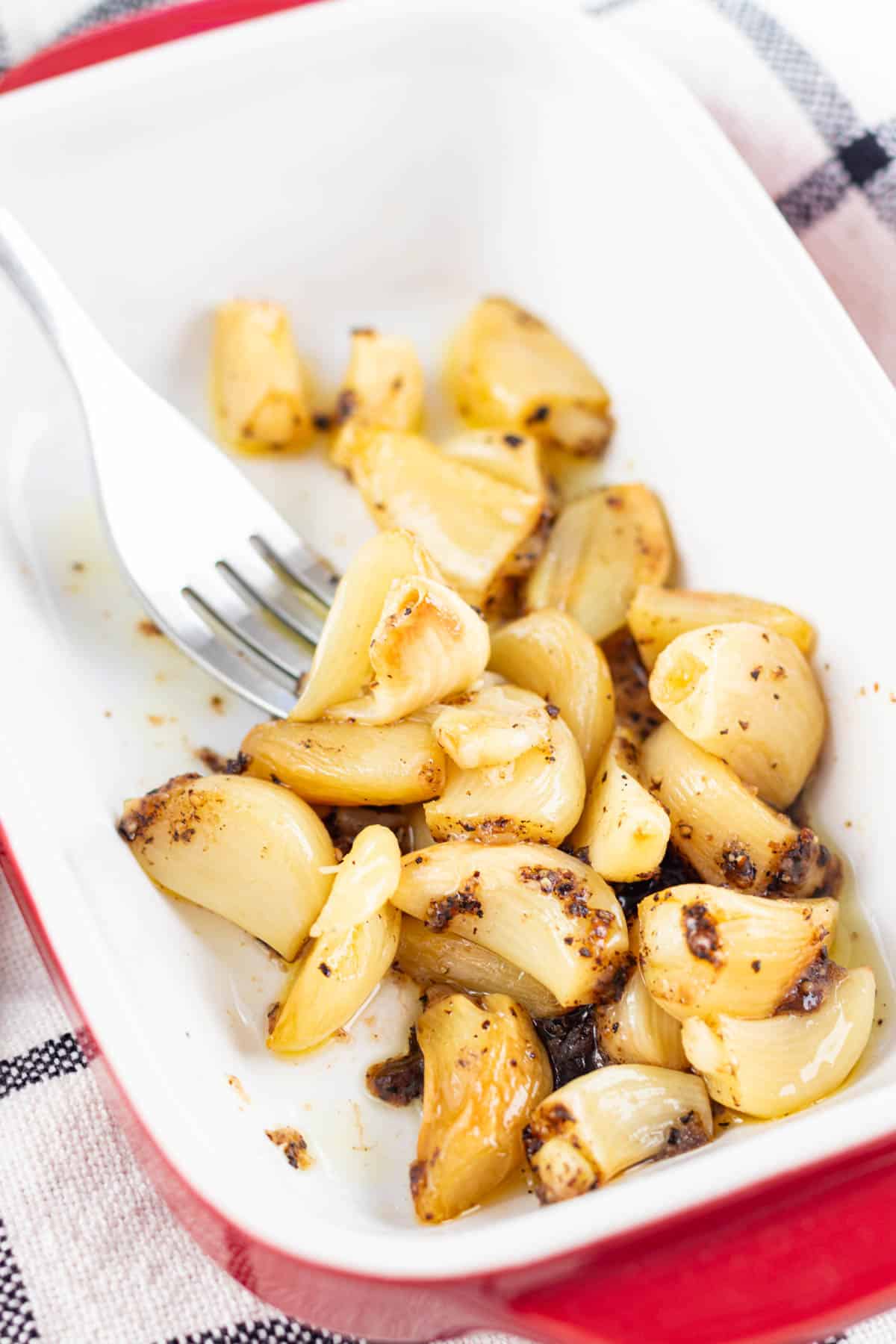
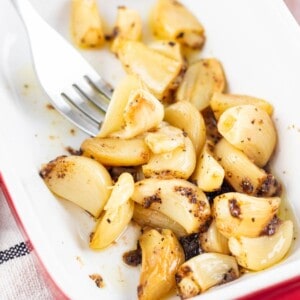
Let's be completely honest here, raw garlic has zero boundaries. It punches you in the face, takes over your entire dish if you add too much, and overstays its welcome on your breath for a solid 24 hours. But when you roast it? Complete magic happens. It softens into this sweet, buttery, caramely paste that you can literally spread on toast like butter. Learning how to roast garlic cloves couldn't be easier. We are skipping the annoying, papery mess of trimming whole bulbs and instead tossing loose cloves in olive oil, wrapping them like a little present, and baking them until they are golden, jammy, and sweet enough to eat with a spoon.
Jump to:
If you're wondering what to do with your roasted garlic cloves, the possibilities are endless! Spread them onto this roasted garlic baguette, blend them into a creamy roasted garlic aioli, or use them in my caramelized onion chip dip and french onion soup pasta. They're also incredible used whole on this camembert fig pizza, blended into this roasted butternut squash soup, or melted into my sun-dried tomato baked brie.
Why You'll Love This Recipe
- Roasted garlic is extremely versatile. It can be added to almost any dish, giving it extra depth and loading it with tons of rich flavor.
- Zero squeezing mess. No waiting for hot and sticky skins to cool down before aggressively digging out the paste.
- Maximum caramelization. Coating the individual peeled cloves in olive oil allows every single edge to turn deeply sweet, jammy, and golden.
- Built-in seasoning. The salt and pepper bake right into the garlic's flesh rather than getting left behind on papery skins.
- Massive time saver. Skip the delicate head trimming and break apart a bag of bulk peeled Costco garlic for an effortless addition to almost any meal!
Summarize and Save This Recipe Using:
Ingredients You'll Need
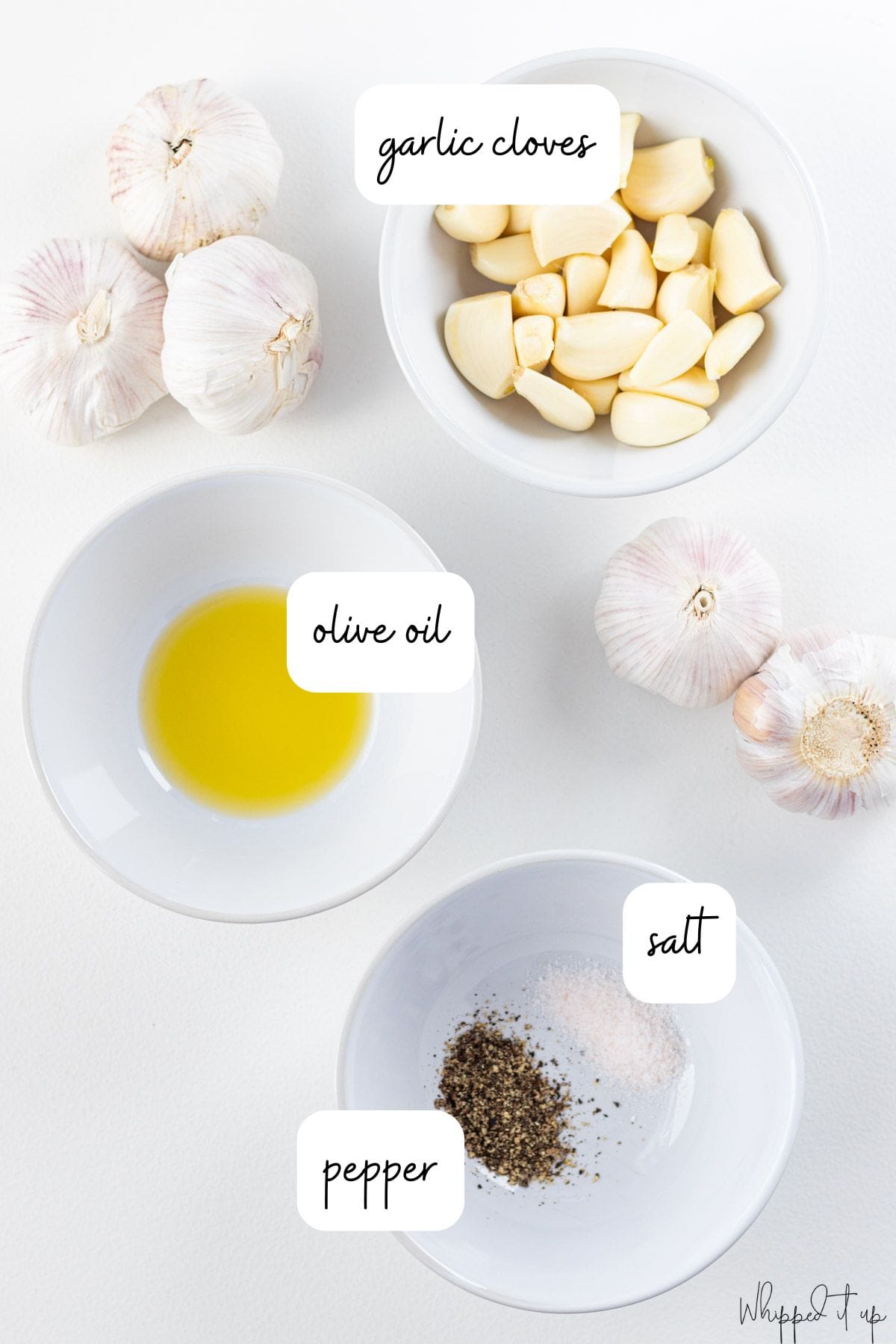
- Garlic Cloves - Freshly peeled cloves or store-bought peeled garlic both work beautifully.
- Olive Oil - Olive oil adds a delicious flavor, but other oils like avocado oil, coconut oil or vegetable oil can be substituted for a more neutral flavor.
- Salt & Pepper - Simple seasonings are all you need. They enhance the natural sweetness of the garlic and bake right into every bite.
See the recipe card below for the complete list of ingredients and measurements.
Easy Recipe Variations
- Herb Roasted Garlic - Add herbs that complement the recipe you'll be using the roasted garlic in. Oregano, basil, dill, thyme, rosemary, or Italian seasoning are all excellent options.
- Parmesan Roasted Garlic - Mash the roasted garlic with freshly grated parmesan, or take it one step further with our garlic parmesan butter sauce!
- Spicy Roasted Garlic - Add red chili flakes before roasting for a spicy twist.
If you love learning simple kitchen techniques from scratch, be sure to check out my guides on how to make caramelized onions, how to ripen bananas quickly and how to toast sesame seeds. Both are easy cooking skills that add a huge amount of flavor to everyday recipes.
How To Roast Peeled Garlic Cloves In The Oven
Step 1
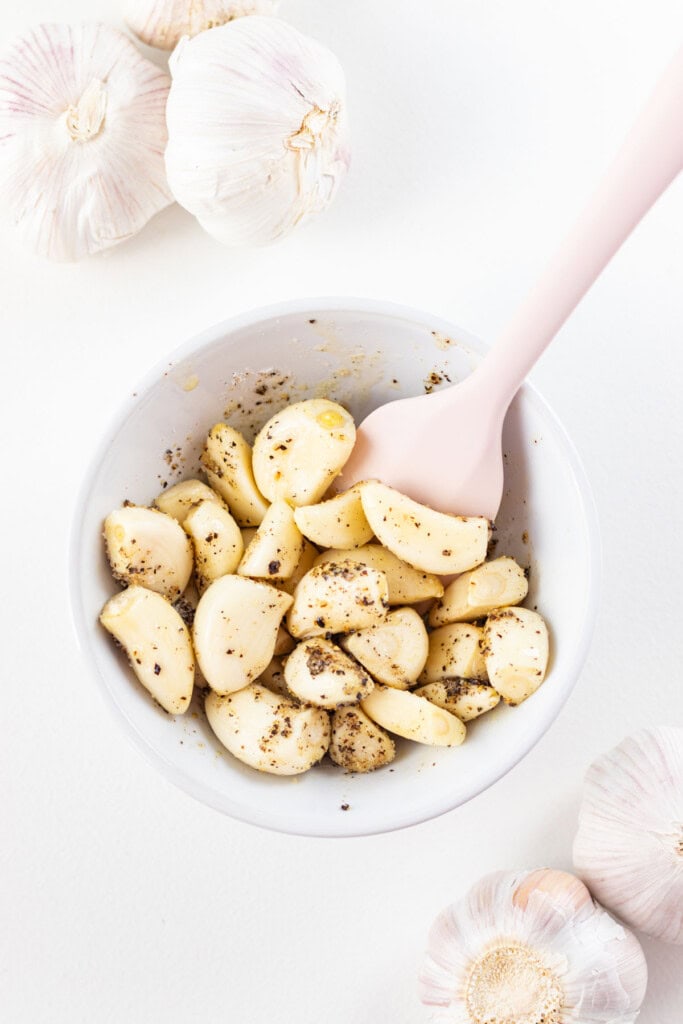
Toss the peeled garlic cloves with olive oil, salt, and pepper until evenly coated.
Save This Recipe! 💌
Step 2
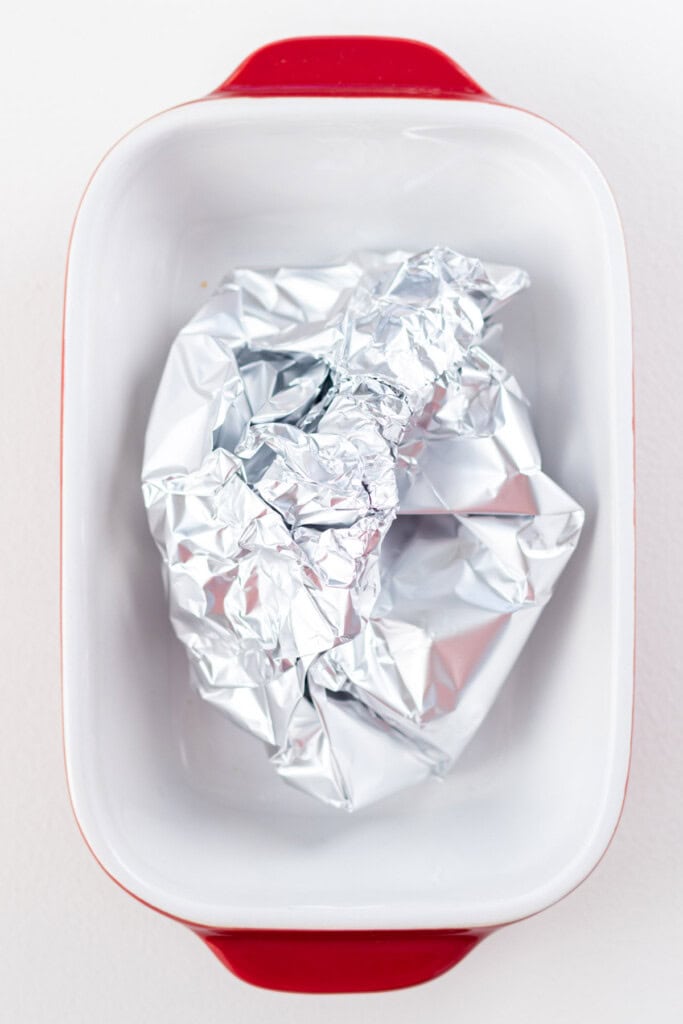
Transfer the garlic to a sheet of aluminum foil, seal it into a tightly closed packet, and place it in a small baking dish or ramekin.
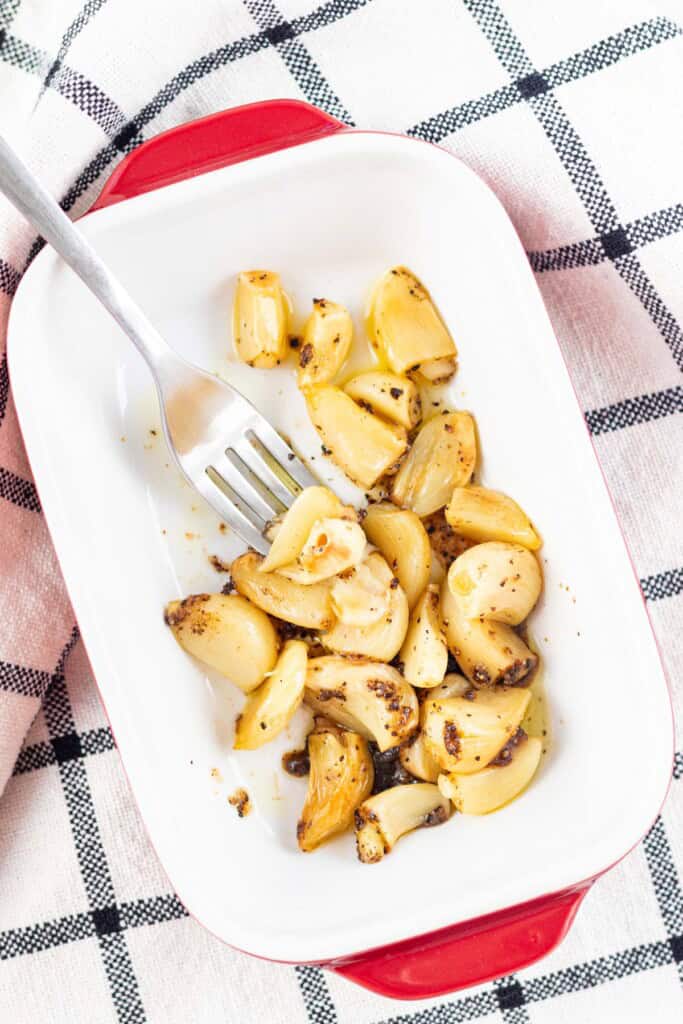
Step 3
Bake until the cloves are soft, golden, and caramelized.
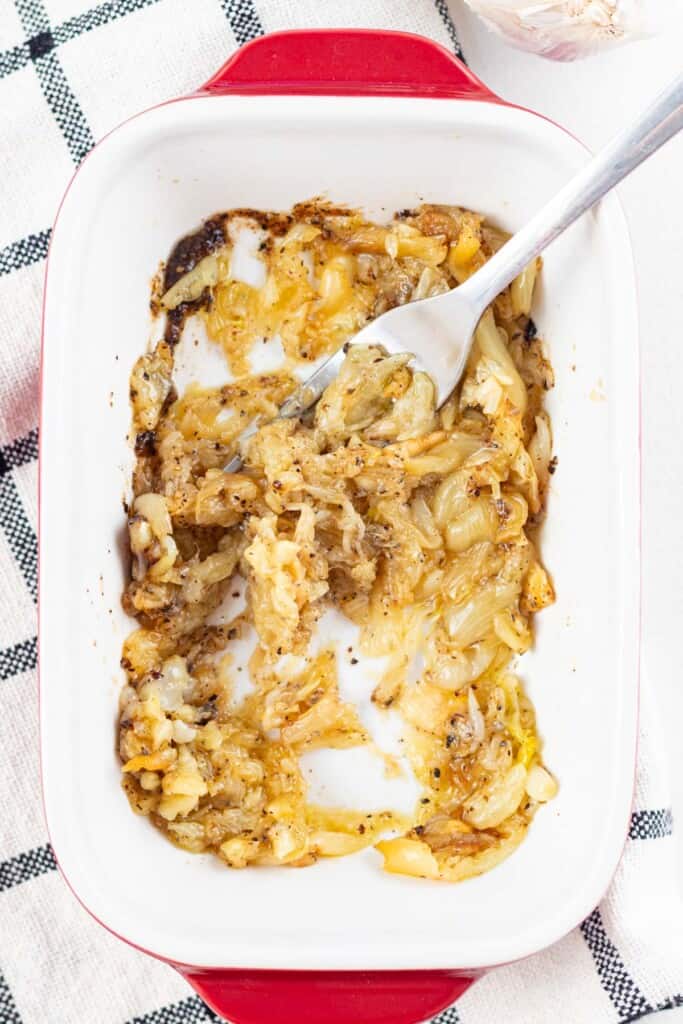
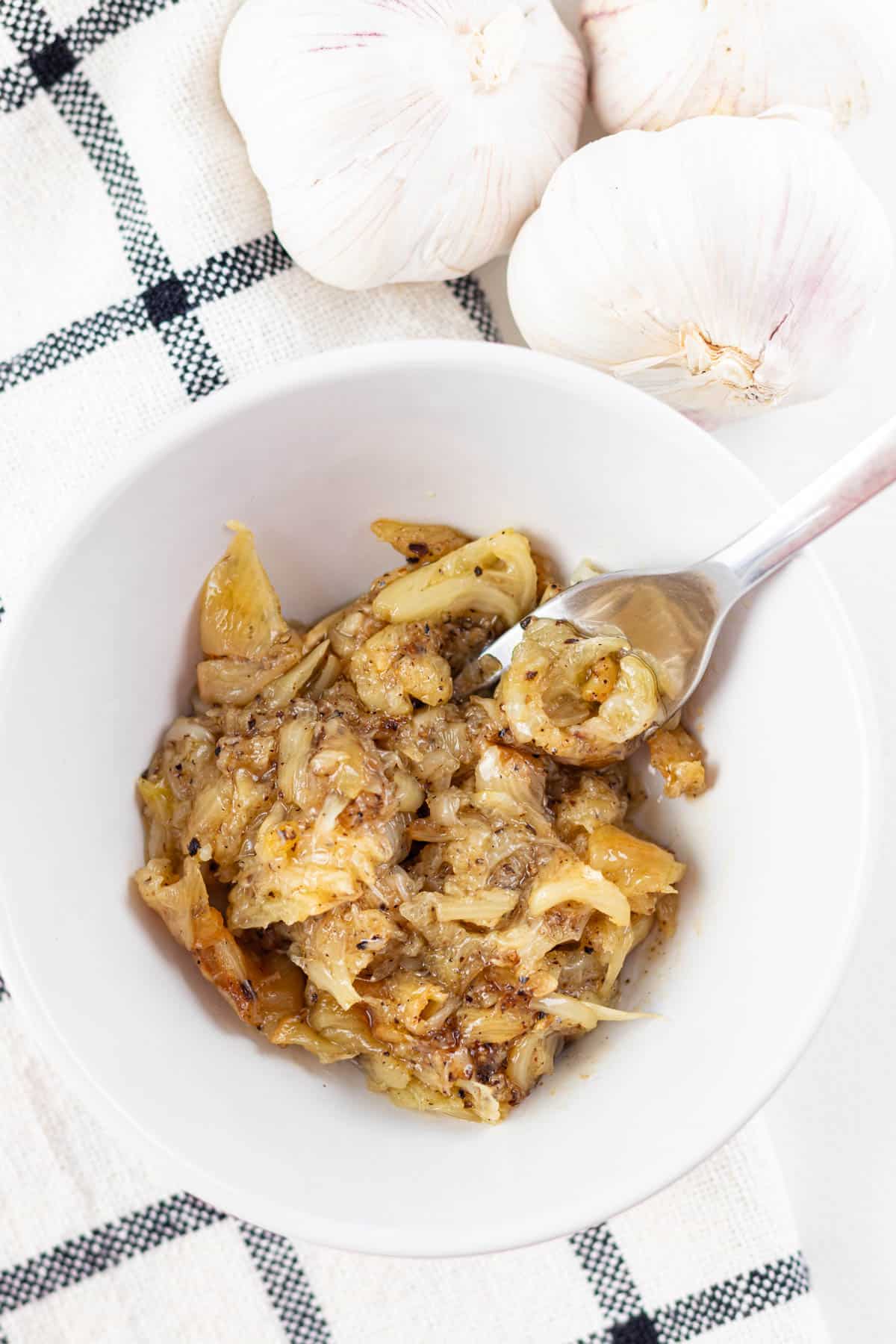
Step 4
Use the roasted garlic cloves whole, or mash them into a smooth paste for adding to your favorite recipes.
How To Prevent Garlic From Burning In the Oven
- Use an oven-safe dish. Always nestle your foil pouch inside a small baking dish or ramekin. This catches any rogue oil that might leak out.
- Seal the aluminum foil packet tightly. Ensure you bunch and pinch all four corners of your aluminum foil completely. This traps the escaping steam, par-cooking the cloves so they soften beautifully before caramelizing.
- Coat thoroughly in oil. Do not skimp on your oil. The oil acts as a protective heat barrier that caramelizes the edges to a gentle golden brown rather than charring and burning them.
Storage Tips
Store leftover roasted garlic cloves in an airtight container and keep them in the refrigerator for up to 4 days.
Frequently Asked Questions
Absolutely! In fact, that's exactly what this recipe is designed for. Using peeled garlic cloves saves time and allows more of the garlic's surface area to caramelize during roasting.
Roasted garlic can turn bitter if it is overcooked or roasted at too high a temperature. If the cloves seem hard, they likely need a little more time in the oven to fully soften.
Yes. Roasted garlic freezes very well and can be stored in an airtight container or portioned into ice cube trays for easy use later on.
A typical head of garlic contains about 10-15 cloves.
The taste of roasted garlic is, well, garlicky, but at the same time it is sweet and soft. Raw garlic normally has an overpowering, pungent bite, but roasting transforms it into a slightly sweet, almost caramelly spread with a mellow garlic flavor.
Try Using Roasted Garlic In These Recipes


If you made this Roasted Garlic Cloves Recipe or any other recipe on my website, please leave a 🌟 star rating, a 💬 comment and share it on Pinterest, Instagram and Facebook!
📖 Recipe
How To Roast Garlic Cloves (Quick & Easy)
↑ click the stars to rate this recipe ↑
Print Recipe Pin RecipeIngredients
- 1 Head Garlic 10-15 cloves, peeled
- 1 Tablespoon Olive Oil
- Salt and Pepper to taste
Instructions
- Preheat the oven to 375°F. Place the peeled garlic cloves into a small bowl. Drizzle with olive oil and season with salt and pepper. Toss until every clove is evenly coated.
- Transfer the seasoned garlic cloves to the center of a piece of aluminum foil. Bring the corners together and seal tightly to create a fully enclosed packet. Place the packet in a small baking dish or ramekin and bake for 30-40 minutes, or until the garlic cloves are soft, fragrant, and lightly golden brown.
- Carefully open the foil packet and allow the garlic to cool slightly. Use the cloves whole, or mash them with a fork into a creamy roasted garlic paste.
Save This Recipe! 💌
Video
Notes
- Garlic: Freshly peeled cloves or store-bought pre-peeled garlic both work for this recipe.
- Olive Oil: Can be substituted for avocado oil, vegetable oil, or coconut oil.
- Add Herbs: Additional herbs like oregano, basil, Italian seasoning, thyme, or rosemary can be added if preferred.
- Store leftover roasted garlic cloves in an airtight container and store them in the refrigerator for up to 4 days.
- Why is my roasted garlic bitter? It can turn bitter if it is overcooked or roasted at too high a temperature.
- Why is my roasted garlic hard? If the cloves are still hard, they likely just need some more time in the oven to fully soften and caramelize.
Nutrition
The nutritional information provided is an estimate based on an online nutrition calculator and it will vary based on the ingredients that you use.



Jessica says
I know this is not the "traditional" way to roast garlic, but I promise it's still easy, way less messy, and just as delicious!