


This sushi rice recipe uses a simple stovetop method and a rice seasoning mix that gives you glossy, sticky, sweet-and-tangy rice every single time. Turns out the only "hard" part is the rice (before it's cooked, of course), and once you've got that down, you're basically a sushi chef. No rice cooker required, no fancy equipment, just a pot and a few pantry staples.

Jump to:
- Why You'll Love This Sushi Rice Recipe 🍚
- What Kind of Rice is Sushi Rice?
- Sushi Rice Ingredients
- Easy Tweaks and Variations
- Sushi Rice Seasoning
- How To Make Sushi Rice on the Stove
- Tips for The Perfect Sushi Rice Recipe
- How to Store Sushi Rice
- FAQ's
- What To Make With This Sushi Rice Recipe
- 📖 Recipe
- ⭐️ Leave a Review
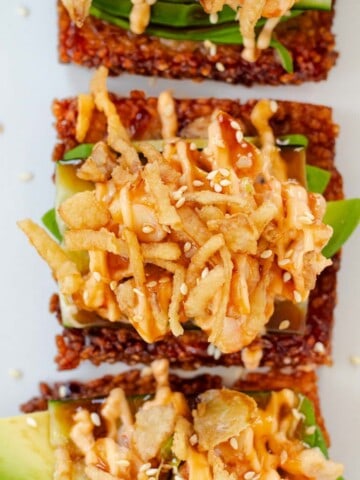
Wondering what to actually do with this sushi rice once it's ready? I use it constantly! It's the base for my salmon sushi bowls, and it pairs perfectly with these red curry baked potstickers or a batch of air-fried salmon filets or crispy honey garlic salmon bites. If you're going the full sushi roll route, don't skip topping it off with homemade spicy mayo and eel sauce for the most authentic experience.
Why You'll Love This Sushi Rice Recipe 🍚
- It's genuinely foolproof. No rice cooker, no special equipment, just a pot with a lid and a quick sushi rice seasoning mix.
- The seasoning (rice vinegar, maple syrup, and a touch of a neutral oil) gives you that classic sweet, tangy, and sticky sushi rice flavor without needing to use sugar.
- It's endlessly useful. Use this sushi rice for crispy sushi bites, sushi bowls, crispy rice squares, or just as a side dish on its own.
- It stores beautifully. Make a big batch and use it for a couple of different meals over a few days.
Summarize and Save This Recipe Using:
What Kind of Rice is Sushi Rice?
Sushi rice traditionally refers to a short-grain Japanese rice. In North America, it's most commonly sold as Calrose rice, a medium-grain variety that's technically a different variety but works beautifully as a substitute thanks to its stickiness once cooked. Both feature short, plump, oval-like grains that develop that classic sticky texture.
A few brands I love: Rooster, Tamanishiki, and Lundberg.
Sushi Rice Ingredients
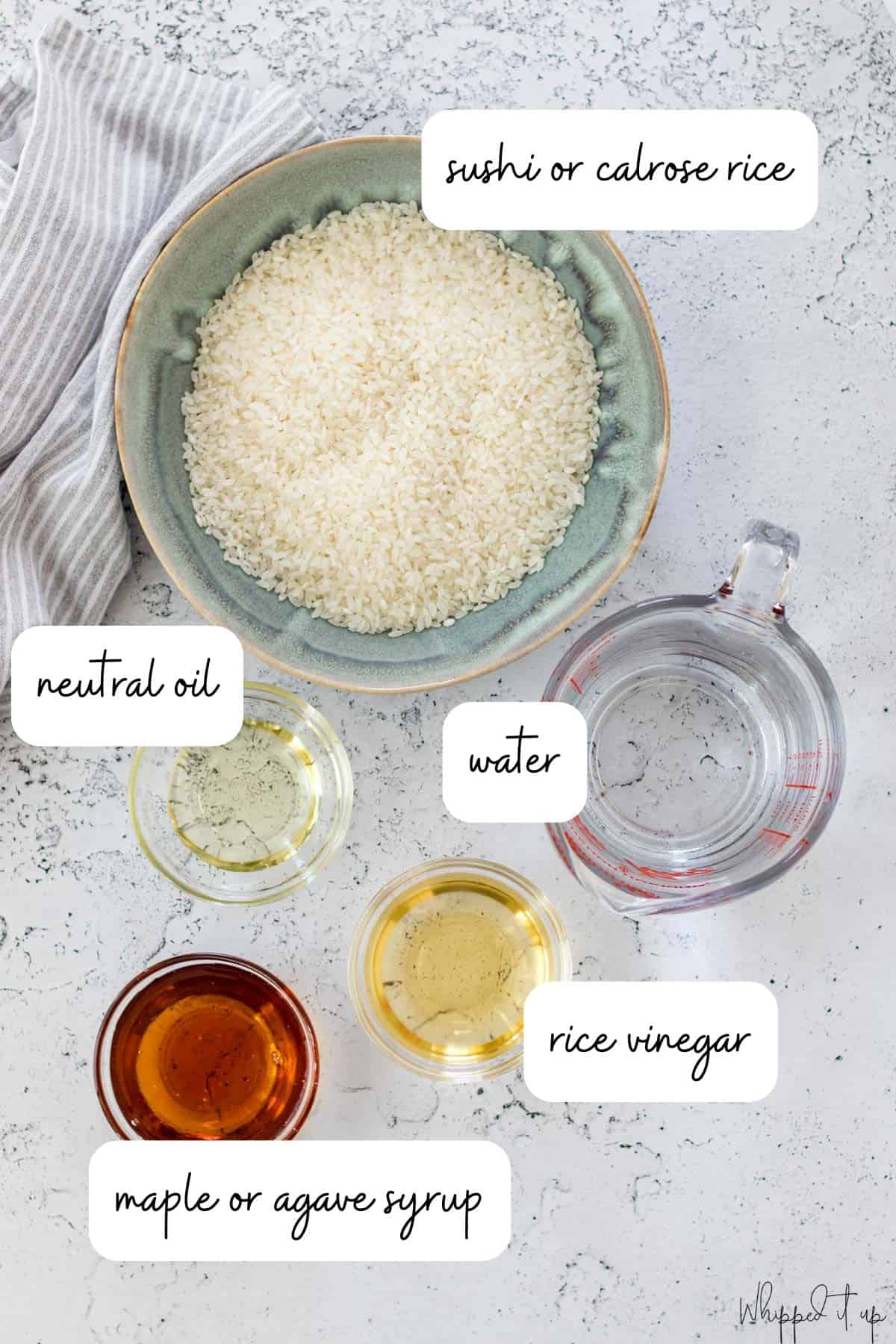
- Rice: Use Calrose or Sushi rice for this recipe.
- Neutral Oil: This keeps the rice from clumping into a gluey mass, while still making it moldable. Use an oil like avocado, vegetable, or grapeseed oil.
- Rice Vinegar: Give the sushi rice its classic tangy flavor. Seasoned rice vinegar is preferred because it will add a teeny bit more sweetness, but if all you have is unseasoned, it will still work. Apple cider vinegar can also be substituted in a pinch.
- Maple Syrup: I use maple syrup in my sushi rice recipe over real sugar because it gives the rice a rounder, more mellow sweetness instead of a flat sugary one. You can substitute it for agave syrup or plain sugar if needed.
- Water: The rice-to-water ratio in this recipe is 4:3. It uses less water because it has to accommodate the addition of the liquid rice seasoning later on in the cooking process.
A full list of ingredients with exact quantities can be found on the recipe card below.
Easy Tweaks and Variations
- Different Sweetener - Use agave or honey for a slightly different flavor profile.
- Add Umami Flavor - Add a small piece of kombu (dried kelp) or a crumbled nori sheet to the cooking water for extra umami flavor.
- Add-Ins - Stir in toasted sesame seeds, a dash of sesame oil or small cooked vegetables like peas, corn, or diced onions.
Use this sushi rice recipe as the base for these Vietnamese grilled chicken bowls or these spicy sweet chili tofu bowls!
Save This Recipe! 💌
Sushi Rice Seasoning
The seasoning is what transforms this from plain-tasting glutinous rice into the perfect sushi rice. It's just rice vinegar, oil, and maple syrup, but that combination gives the rice a subtle sweetness and tang. The oil helps break up the sticky gluten, making the rice easy to work with while still keeping its signature sticky texture.
How To Make Sushi Rice on the Stove
You don't need a rice cooker for this recipe, just a good old saucepan with a lid. Cooking sushi rice is just like cooking any other type of rice, just the only difference is that the ratios are a bit different.
Step 1
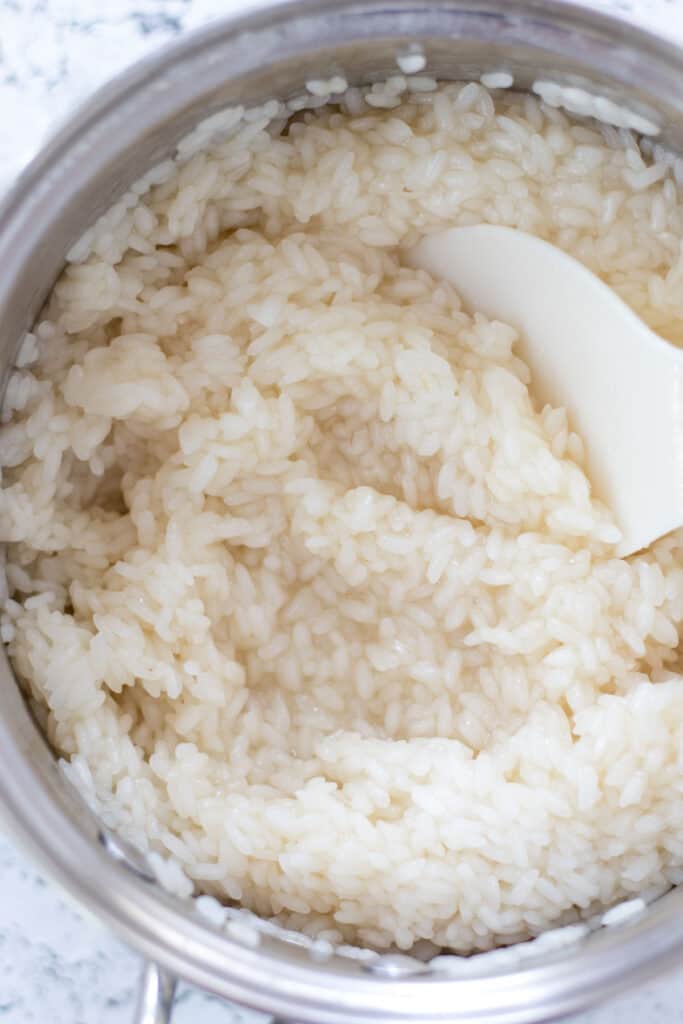
Add the sushi rice and water to a saucepan, cover with a tight-fitting lid, and cook over medium heat until the water is absorbed.
While it cooks, in a small bowl, whisk together the rice vinegar, maple syrup and oil, and set aside.

Step 2
Once the rice is done, remove it from the heat, stir in the seasoning mixture, cover again, and let it sit for 10-15 minutes to absorb into the rice.
Step 3
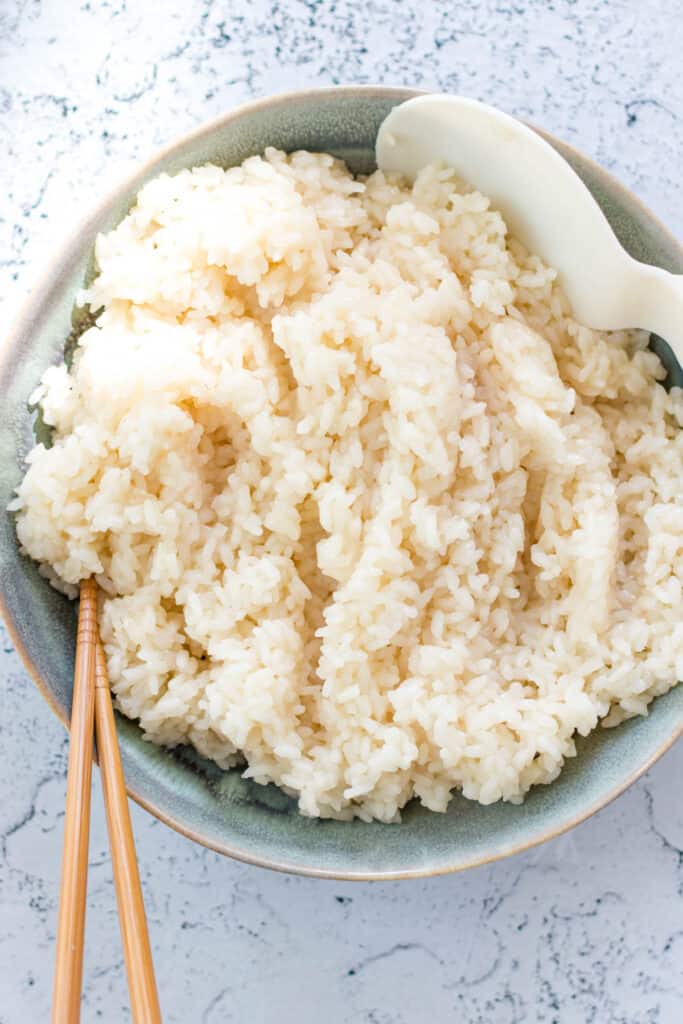
Fluff the rice with a fork or a rice paddle and transfer it to a serving bowl. Serve it hot or cold.
Tips for The Perfect Sushi Rice Recipe
- Add the seasoning while the rice is still hot. It absorbs better and gives you a glossy, classic look and texture.
- Don't overmix the seasoning. Stirring the rice seasoning in like you are stirring batter could mash the rice grains and cause the rice to turn overly sticky and gummy. Use a gentle folding/slicing motion instead to gently stir the seasoning into the rice.
- Let the rice cool to room temperature before rolling sushi or storing. Warm sushi rice won't hold its shape in a roll, and storing sushi rice while it is too hot will cause condensation in the container, making the rice mushy.
How to Store Sushi Rice
Sushi rice stores wonderfully in the fridge. Let it cool to room temperature, then tightly pack it into an airtight container and refrigerate for 3-5 days. Once the rice is cold, use it to make sushi rolls, or reheat it and serve it warm.
To Reheat: place the rice on a microwave-safe plate, fluff with a fork, add an ice cube to the center, and press a piece of parchment paper over the top of the entire plate. Microwave for about 1 minute, then remove the ice cube and fluff again. This trick keeps the rice moist and tasting freshly made.
FAQ's
Calrose is a type of rice that's commonly sold and used as sushi rice in North America. While true Japanese short-grain rice is technically different, Calrose works well and is what most home cooks use.
This usually comes down to too much water, overstirring the seasoning in, or not letting the rice rest with the lid on to fully absorb the seasoning after cooking. Stick to the 4:3 ratio and use a gentle folding motion when adding the seasoning.
When you compare sushi rice vs. regular rice, the biggest differences are grain type and seasoning. Sushi rice is a short or medium-grain variety that's naturally stickier than long-grain rice like jasmine or basmati, and it's seasoned with a vinegar mixture after cooking, which regular rice is not.
Yes! Use the same water-to-rice ratio as the stovetop method, run it on the white rice setting, then stir in the seasoning once it's done cooking, replace the lid and let it sit and absorb for 15 minutes before serving.
The ratio is 4 parts water to 3 parts rice. The rest of the liquid comes from the rice seasoning that is added near the end.

What To Make With This Sushi Rice Recipe
There are endless possibilities for what you can make with this sushi rice!
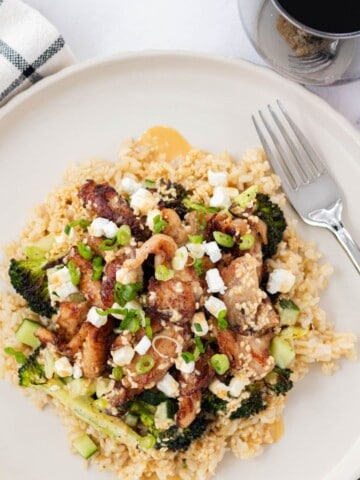
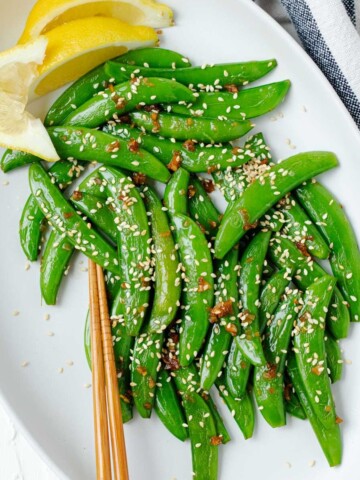
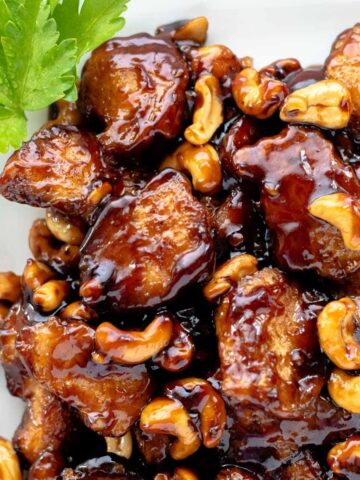

If you made this Sushi Rice Recipe or any other recipe on my website, please leave a 🌟 star rating, a 💬 comment and share it on Pinterest, Instagram and Facebook!
📖 Recipe
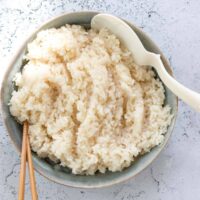
Sushi Rice Recipe
↑ click the stars to rate this recipe ↑
Print Recipe Pin RecipeIngredients
- 2 cups Water
- 1 ½ cups Sushi Rice or Calrose Rice
- ¼ cup Rice Vinegar
- ¼ cup Maple Syrup or Agave Syrup
- 1 Tablespoon Neutral Oil like avocado or vegetable oil
Instructions
- Add the water and sushi rice to a medium saucepan and stir together. Cover with a tight-fitting lid and cook over medium-low heat until the water is fully absorbed, about 16-20 minutes.
- While the rice cooks, whisk together the rice vinegar, maple syrup, and oil in a small bowl. Set aside.
- Once the water has fully absorbed, remove the rice from the heat. Pour the seasoning mixture over the rice and stir gently to combine. Cover and let sit for an additional 10-15 minutes.
- Fluff the rice before serving. Serve hot or cold (see storage tips below).
Save This Recipe! 💌
Notes
- Rice: Sushi rice or Calrose rice is perfect for this recipe.
- Rice Vinegar: Seasoned rice vinegar is preferred because it adds a very subtle sweetness, but unseasoned or apple cider vinegar can be used instead.
- Maple Syrup: Can be swapped for agave syrup, honey, or plain sugar.
- Neutral Oil: Any neutral-tasting oil can be used, types like avocado, grapeseed, or vegetable oil are all perfect options.
- Optional Add-Ins: Stir in toasted sesame seeds, a dash of sesame oil, a crumbled nori sheet, or small cooked vegetables.
- Add the rice seasoning while the rice is still hot for the best absorption, and don't overmix the seasoning with the rice.
- Let the rice cool completely before using it to roll sushi.
- Store sushi rice in an airtight container and refrigerate for up to 3-5 days.
Nutrition
The nutritional information provided is an estimate based on an online nutrition calculator and it will vary based on the ingredients that you use.

Kellie says
That is so awesome! Sounds delicious…sweet and tangy
April says
I am so excited to try this! I've always wanted to make sushi at home, but have been too scared. Thank you for making this sound simple enough for a newbie like me. 🙂
Jessica says
Yay! We wish you the best luck on your sushi making adventures. We would love to know how it turns out!
Jessica says
I developed this sushi rice recipe a long time ago and still use it all the time. It is so delicious, perfectly sticky, and wonderful for all things sushi!